Cholesterol numbers decoded: what your blood test results mean
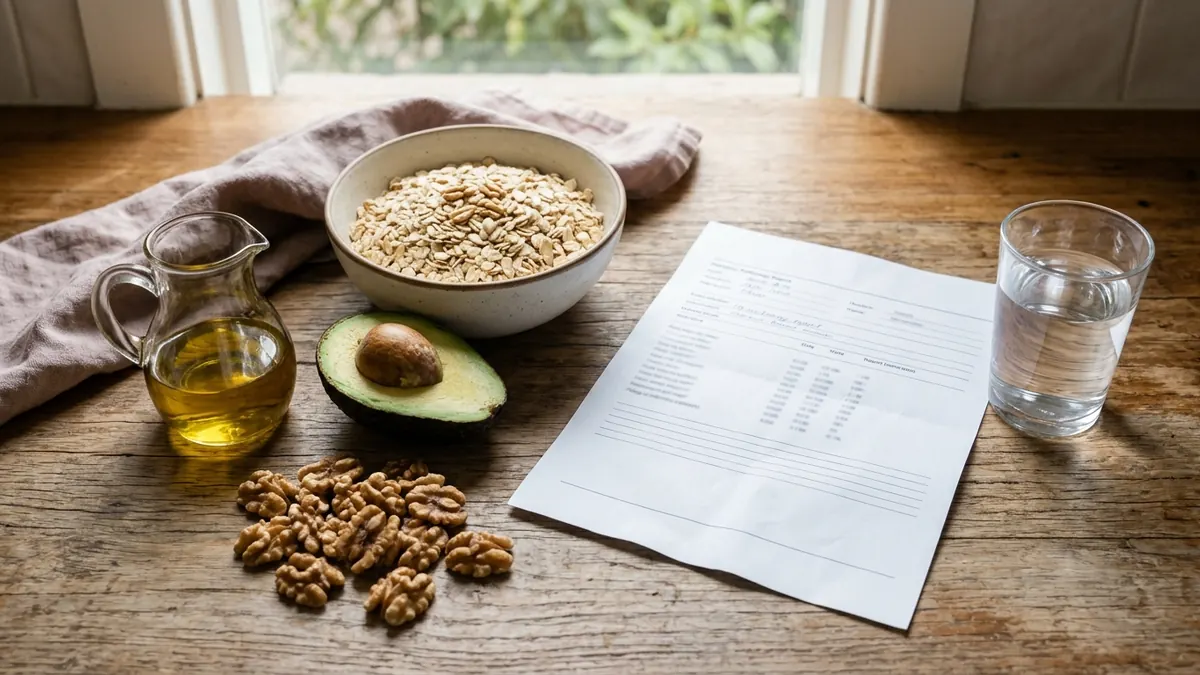
A cholesterol report can look like alphabet soup, with four or five numbers and the odd 'H' flagged beside them. This guide explains what each figure means, why your target may differ from someone else's, and when to talk to your GP or pharmacist.
- LDL and non-HDL cholesterol usually tell you more than total cholesterol alone.
- Your personal target depends on your overall heart attack and stroke risk, not just one number.
- Saturated fat, alcohol, inactivity and smoking all push results in the wrong direction, and changes can show within weeks.
- A Medicare-rebated Heart Health Check is available from age 45 (30 for Aboriginal and Torres Strait Islander people).
- Ask your GP or pharmacist before starting, changing or stopping any cholesterol treatment.
Why one blood test causes so much confusion
The pathology results come back and there are four or five numbers, maybe one flagged with an H. Cholesterol reports look simple until you try to read one. Is 5.6 good? Is a high HDL a problem? And why does your mate with a 'normal' total have a stent?
Cholesterol itself isn't the villain. Your body uses it to build cell walls, make hormones and produce vitamin D. The trouble lies in how much is circulating and what it's packaged in. Fats travel through your blood inside particles called lipoproteins, and the type of particle tells you more than the grand total does.
The numbers on your report
Australian labs report cholesterol in millimoles per litre (mmol/L). A standard lipid panel usually lists the following.
Total cholesterol
This adds up the cholesterol carried in all your particle types. The Heart Foundation's general reference point is under 4.0 mmol/L, though plenty of healthy-looking adults sit above that. On its own, the total is a blunt tool. A high total driven by lots of HDL means something quite different from a high total driven by LDL.
LDL cholesterol
LDL is the 'bad' one. It delivers cholesterol to artery walls, where it can build up as plaque over years. For most people it's the number doctors watch most closely. A figure under 2.0 mmol/L is often cited for people at higher risk, but your GP sets your goal based on your overall picture, not on a single cut-off.
HDL cholesterol
HDL is the 'good' one, because it carries cholesterol back to the liver for disposal. Above 1.0 mmol/L is the usual aim. A low reading is worth noting as a sign of things like inactivity, smoking or excess weight. Supplements and medicines that simply push HDL higher haven't been shown to prevent heart attacks, so it isn't a number to chase on its own.
Triglycerides
Triglycerides are a different fat, coming from food and made by your liver. Under 2.0 mmol/L is the common target. They climb with alcohol, sugary drinks, excess weight and diabetes, and they jump if you've had a big meal just before the test. Very high levels, above about 10 mmol/L, can inflame the pancreas and need prompt medical attention.
Non-HDL cholesterol
This is total cholesterol minus HDL, and it captures every particle type that can clog arteries. Under 2.5 mmol/L is a commonly used goal for people at higher risk. Not every lab prints it, but your GP can work it out in seconds.
Why your target isn't the same as your neighbour's
Current Australian guidance leans on absolute cardiovascular risk. That's your estimated chance of a heart attack or stroke over the next five years, calculated from age, sex, blood pressure, smoking, diabetes, kidney function and cholesterol. Two people with an identical LDL of 3.5 can land in very different places. A 35-year-old non-smoker with normal blood pressure is probably low risk. A 62-year-old ex-smoker with type 2 diabetes is not.
Family history matters too. Familial hypercholesterolaemia is an inherited condition affecting roughly 1 in 250 Australians. It often means an LDL above 5.0 mmol/L from a young age, and relatives who had heart disease early. It doesn't respond fully to diet alone and deserves proper medical follow-up. Another inherited marker, lipoprotein(a), is worth asking your GP about once in your life if heart disease runs in your family.
What nudges your numbers up or down
Food has a real effect, though it's less dramatic than people hope. For most people, saturated fat (fatty meat, butter, coconut oil, pastries, a lot of takeaway) raises LDL more than the cholesterol in eggs does. Swapping toward olive oil, nuts, avocado and oily fish helps. So does soluble fibre from oats, legumes and psyllium. Spreads enriched with plant sterols can lower LDL modestly when used daily.
Movement helps triglycerides and HDL in particular. Aiming for 150 minutes a week of moderate activity, such as brisk walking, is a sensible start. Cutting back alcohol, quitting smoking and losing even a few kilos can shift your results as well.
Sometimes you do everything right and LDL stays stubbornly high. Genetics, an underactive thyroid, kidney disease and some medicines can all play a part. That isn't a personal failing, and it's a good reason to talk with your GP rather than just trying harder.
Getting tested in Australia
A Medicare-rebated Heart Health Check is available to adults 45 and over, and from 30 for Aboriginal and Torres Strait Islander people. Your GP checks blood pressure, orders a cholesterol test and calculates your risk. Fasting is often not required these days, but follow the instructions on your pathology slip, because triglycerides are the number most affected by a recent meal.
How often to retest depends on the result. Someone with normal numbers and low risk might be rechecked every few years. If you've changed your diet or started treatment, a follow-up in roughly six to twelve weeks is common.
Some pharmacies offer finger-prick cholesterol checks. They're handy for a rough snapshot, but a high or unexpected result should be confirmed with a pathology test and discussed with your GP.
When lifestyle changes aren't enough
If your overall risk is high, your GP may talk to you about prescription cholesterol-lowering medicine, such as a statin. That decision is shared and based on your whole risk profile, not one number on a page. The benefits, possible side effects and alternatives are all worth discussing.
If you do start a medicine, your pharmacist can explain when to take it, what to watch for (unexplained muscle aches are worth reporting) and whether it interacts with anything else you use, including supplements and over-the-counter products. Please don't stop a prescribed medicine without checking with your GP first. Fish oil capsules and similar products are not a substitute for treatment when it's been recommended.
Frequently asked questions
Do I need to fast before a cholesterol test?
Often not, as total, LDL and HDL cholesterol change little after eating. Triglycerides can rise after a meal, though, so follow the instructions on your pathology request. If your GP wants a fasting sample, that usually means 10 to 12 hours with only water.
Is a high HDL always a good thing?
Not necessarily. Moderately high HDL is generally reassuring, but very high levels don't guarantee protection, and HDL is just one piece of the picture. Your GP will look at it alongside LDL, blood pressure and your other risk factors.
Do eggs raise my cholesterol?
For most people, eggs have a small effect on blood cholesterol compared with saturated fat. People with diabetes or established heart disease, or those with familial hypercholesterolaemia, should ask their GP or an accredited practising dietitian for personal advice.
How often should I have my cholesterol checked?
It varies. Adults with normal results and low risk may only need a check every few years, while people with high results or on treatment are tested more often. Your GP can set a schedule that suits you.
Medical disclaimer: This information is general in nature and is not a substitute for advice from your doctor or pharmacist. Prescription-only medicines are supplied only against a valid prescription.