Dry Eyes and Glaucoma: What Australian Adults Should Know
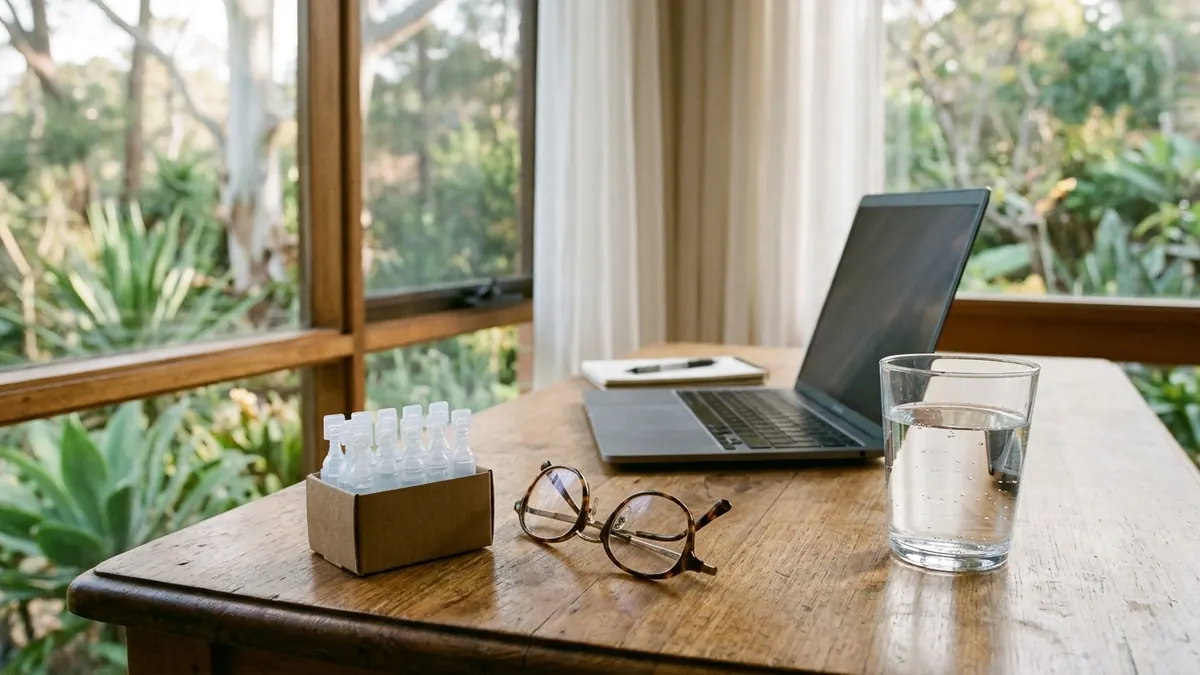
Dry eye is common, irritating and usually manageable, while glaucoma often causes no symptoms until vision has already been lost. Here is how the two differ, why regular eye checks matter, and when to talk to your pharmacist, GP or optometrist.
- Dry eye is common and uncomfortable, but usually manageable with blinking breaks, warm compresses and lubricating drops.
- Glaucoma often has no early symptoms, so regular eye checks matter even if your vision seems fine.
- Family history, age over 50, diabetes and long-term steroid use all raise glaucoma risk.
- Never stop prescribed eye drops without talking to your doctor, and ask your pharmacist how to space different drops.
- Sudden eye pain, a hard red eye, halos or vision loss needs urgent medical care.
Two very different eye problems that get lumped together
Ask a room of Australian adults about eye trouble and most will mention the same things: stinging after a long day at the screen, contact lenses that feel scratchy by evening, eyes that water in the wind. That is the territory of dry eye. It is uncomfortable, but it rarely threatens sight.
Glaucoma is a different matter. It is a group of conditions that damage the optic nerve, often linked to pressure inside the eye, and it tends to take peripheral vision first. Glaucoma Australia estimates around 300,000 Australians have it, and about half of them don't know. The two conditions can exist side by side, and treatment for one can affect the other, so it helps to understand both.
Dry eye: what is going on
Your eyes rely on a thin tear film made of water, oils and mucus. If you don't make enough tears, or the tears evaporate too quickly, the surface of the eye becomes irritated. The oily layer comes from small glands along the eyelid edge, and when those clog up (called meibomian gland dysfunction), tears break down faster. This is one of the most common reasons for dry eye.
Common triggers
We blink far less when we concentrate on a screen, sometimes by half. Air conditioning, heaters, dusty or windy conditions and smoke all add to the problem. Age matters too, and so do hormonal changes around menopause.
Some medicines can contribute, including certain antihistamines, some antidepressants, and isotretinoin. Autoimmune conditions such as Sjögren's syndrome and long-term contact lens wear are also linked. If you suspect a medicine is drying your eyes, don't stop it on your own. Speak to your pharmacist or prescriber first.
Practical things that often help
Small habits can make a real difference. Try blinking fully and deliberately during screen work, and look away every 20 minutes or so. A warm compress held on closed lids for several minutes, followed by gentle lid cleaning, can help loosen blocked oil glands. Position screens slightly below eye level so your eyes sit a little more closed.
Over-the-counter lubricating drops are the usual first step. If you need them more than four times a day, preservative-free single-use vials are generally gentler on the eye surface. Gels and ointments last longer but blur vision, so many people save them for bedtime.
How your pharmacist can help with dry eye
The eye care aisle can be overwhelming. Some drops are simple lubricants, others target lid inflammation or are made for contact lens wearers. A pharmacist can ask a few questions, such as how long symptoms have lasted, whether you wear lenses, and what other medicines you take, then suggest a suitable product.
Avoid using "get the red out" drops regularly. They shrink blood vessels for a short time, and frequent use can leave eyes redder once the effect wears off. And if symptoms haven't settled after a couple of weeks of sensible self-care, book in with an optometrist. Persistent dryness deserves a proper look, because other problems can mimic it.
Glaucoma basics: the quiet one
In the most common form, open-angle glaucoma, fluid drains too slowly from the eye and pressure can build up. Over years, this can damage nerve fibres. There is no pain and no redness. Because the brain fills in gaps, people often don't notice that their side vision is fading until the loss is advanced.
That is why glaucoma is often called the silent thief of sight. Lost vision cannot be restored, but early detection and treatment can slow or stop further loss in many people.
Who is at higher risk
Age is the biggest factor, with risk rising after 50. A close relative with glaucoma raises your risk considerably, so ask your family if you aren't sure. Other factors include diabetes, short-sightedness, long-term use of corticosteroids (including some eye drops and tablets), and past eye injury.
Some groups may be advised to start checks earlier, including Aboriginal and Torres Strait Islander people and those with African or Asian ancestry. Your optometrist can advise on the right timing for you.
Eye checks and what treatment looks like
A comprehensive eye exam with an optometrist goes well beyond reading letters on a chart. It can include measuring eye pressure, examining the optic nerve, and testing your visual field. Many optometry consultations attract a Medicare rebate, though fees vary between practices, so ask when booking. If anything looks suspicious, you will be referred to an ophthalmologist.
Glaucoma is managed rather than cured. Most people start with prescription eye drops that lower eye pressure. Others may have laser treatment or surgery. The drops only work if used consistently, which is harder than it sounds when you feel perfectly well. Phone reminders and linking the drops to a daily routine like brushing your teeth can help.
If you use both glaucoma and lubricating drops, the usual advice is to wait about five minutes between different drops so one doesn't wash out the other. Some glaucoma drops contain preservatives that can worsen dry eye. If your eyes feel sore, tell your doctor rather than skipping doses. There are preservative-free options, and your pharmacist can explain how to use your drops correctly.
Signs that mean act now
Most dry eye can wait for a routine appointment. Some symptoms cannot. Go to an emergency department or call 000 if you have sudden eye pain with blurred vision, halos around lights, a hard red eye, nausea or vomiting, or a severe headache. These can signal acute angle-closure glaucoma, where pressure rises quickly and sight can be lost within hours.
See a doctor or optometrist promptly for sudden vision changes, new flashes or floaters, light sensitivity, or an eye that is painful rather than merely gritty. If you are unsure which category your symptoms fall into, your pharmacist or GP can help you decide how quickly to be seen.
Frequently asked questions
Can dry eye turn into glaucoma?
No. They are separate conditions with different causes. You can have both at once, though, and some glaucoma drops can make dryness worse, so mention any irritation to your doctor or optometrist.
How often should I have my eyes checked?
It depends on your age and risk factors. Many adults with no concerns are advised to have a check every two years, and people with a family history of glaucoma, diabetes or other risks may need them more often. Your optometrist can set a schedule.
Is it safe to use lubricating drops every day?
Daily use is common and generally fine, especially preservative-free types. If you find you need drops constantly, see an optometrist to look for an underlying cause such as blocked oil glands.
Does glaucoma always cause high eye pressure?
Not always. Some people develop optic nerve damage with eye pressure in the normal range. That is another reason a full exam, not just a pressure check, is worthwhile.
Medical disclaimer: This information is general in nature and is not a substitute for advice from your doctor or pharmacist. Prescription-only medicines are supplied only against a valid prescription.