How to Keep Track of Multiple Medicines Without the Mix-Ups
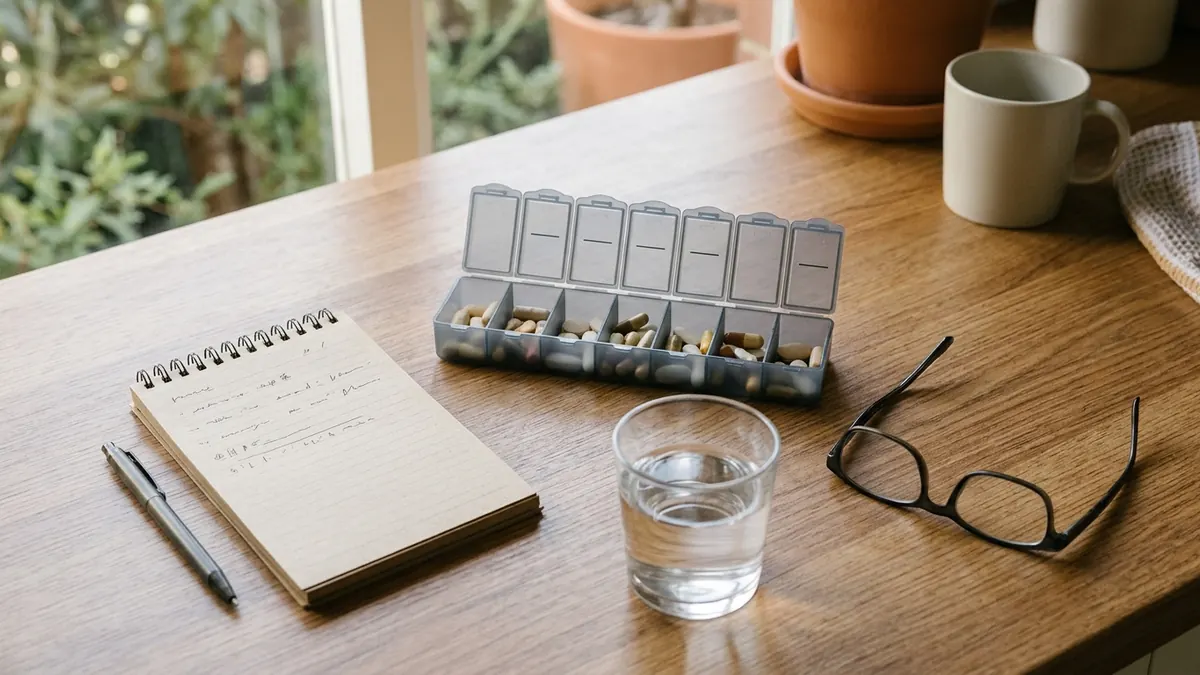
Taking several medicines each day is common, but it's easy to lose track of what's what. These simple habits and tools can help you stay organised and know when to ask your pharmacist or GP for a hand.
- Keep one written medicines list, including over-the-counter products and supplements, and update it whenever anything changes.
- Tie doses to daily habits and use a pill organiser, dose administration aid or labelled phone alarms.
- Using one pharmacy helps your pharmacist spot interactions and overlaps.
- Check active ingredients on labels to avoid accidentally doubling up, especially with cold and flu products.
- Ask your GP or pharmacist about a medicines review if your routine feels hard to manage.
Why it gets harder as the list grows
One tablet a day is easy to remember. Five or six, at different times, some with food and some without, is a different story. Many Australians take multiple medicines for blood pressure, cholesterol, diabetes, pain, mood or heart health. Add a few over-the-counter products and a vitamin or two, and the daily routine can start to feel like a juggling act.
The usual problems are small ones: a missed dose, a doubled-up dose, an old script that never got filled, or a medicine you've stopped but still have in the cupboard. Most are avoidable with a bit of structure. None of it needs to be fancy.
Start with one up-to-date medicines list
A written list is the single most useful tool you can have. It gives you, your GP, your pharmacist and any hospital staff the same clear picture, which matters most in an emergency or when you see a new doctor.
What to put on it
For each medicine, write the name (both the active ingredient and the brand on the box if they differ), the strength, how much you take, when you take it, and what it's for. Add the prescriber's name and the date it was started or last changed.
Include everything: prescription medicines, over-the-counter pain relief, allergy tablets, creams, eye drops, inhalers, vitamins, herbal products and anything taken only occasionally. Note any allergies or past bad reactions at the top.
Where to keep it
Keep a copy in your wallet or bag, and a photo on your phone. Stick another on the fridge, where a family member or ambulance paramedic would look. Your pharmacist can usually print a current list from your dispensing history, which is a handy starting point. Check it against what's actually in your cupboard, because the two don't always match.
Update it every time something changes. Do it on the spot, in the car park if need be, rather than promising yourself you'll do it later.
Build a routine around your day
The easiest routines hang off things you already do. Morning tablets go next to the kettle or toothbrush. Evening ones sit beside the remote or your reading glasses. Linking a new habit to an existing one works better than relying on memory alone.
Pill organisers and dose administration aids
A weekly pill organiser with compartments for morning, noon, evening and bedtime is cheap and available at any pharmacy. Fill it once a week at the same time, such as Sunday after breakfast, and use your list as you go. Not every medicine suits an organiser. Some are sensitive to moisture or light, and others need to stay in their original packaging. Ask your pharmacist before decanting anything.
If filling it yourself feels like a chore or you're worried about errors, many pharmacies prepare dose administration aids, such as sealed blister packs or sachets, labelled by day and time. Fees vary, so ask your pharmacy what's involved. These can be especially helpful for people on many medicines or those who care for someone else.
Reminders that actually get noticed
Phone alarms work well, provided you give them clear labels like "Metformin with dinner" rather than a vague "meds". Some people prefer a simple paper tick chart on the fridge. Whatever you choose, decide in advance what you'll do about a missed dose. The answer differs between medicines, so ask your pharmacist rather than guessing. Doubling up is not always the safe fix.
Stick with one pharmacy where you can
When one pharmacy fills all your scripts, the pharmacist can see the whole picture and pick up problems, such as two medicines that interact or a repeat that's overdue. Using several pharmacies makes that much harder.
Ask about the services on offer. A medication review at the pharmacy is a chance to go through everything you take. If you're on many medicines, your GP can also refer you for a Home Medicines Review, where an accredited pharmacist visits you at home, looks at what you actually have, and sends recommendations to your doctor. It's often covered by Medicare for eligible people, so ask your GP whether you qualify.
My Health Record can also store a summary of your medicines, which can be useful if you see different doctors or end up in hospital. Your pharmacist or GP can help you check what's on yours.
Watch for overlaps and surprises
Some of the most common mix-ups happen outside the prescription pile. A cold and flu product may already contain paracetamol, so taking it alongside your usual paracetamol can push you over the daily limit without you realising. The same goes for combination products with ibuprofen or antihistamines.
Check the active ingredient on every label, not just the brand name. Supplements and herbal products can also interact with prescription medicines. St John's wort and grapefruit are two well-known examples. Always tell your pharmacist what you're taking before buying anything new, even if it seems harmless.
Also tell every health professional you see about all your medicines. A specialist may not know what your GP started last month, and the reverse is true too.
Store, check and clear out regularly
Keep medicines in a cool, dry place away from children, which usually rules out the bathroom and the car. Some need the fridge. Check the label if you're unsure.
Every few months, go through your supply. Look for expired items, medicines you no longer take, and anything that was stopped or changed. Don't keep leftovers "just in case", because old packs are a common source of confusion. Take unwanted or out-of-date medicines to any pharmacy for free disposal through the Return Unwanted Medicines program, rather than putting them in the bin or down the sink.
If you ever suspect someone has taken too much of a medicine or taken the wrong one, call the Poisons Information Centre on 13 11 26 straight away. In an emergency, call 000.
Frequently asked questions
What should I do if I miss a dose?
It depends on the medicine and how long ago the dose was due. Some can be taken when you remember, while others should be skipped. Check the consumer information leaflet or ask your pharmacist, and avoid doubling up unless you've been told it's safe.
Can I put all my tablets in one pill organiser?
Often, but not always. Some medicines are affected by moisture or light, or need to stay in their original packaging. Ask your pharmacist which of yours are suitable before filling an organiser.
What is a Home Medicines Review?
It's a service where an accredited pharmacist visits you at home, goes through everything you take and sends a report to your GP with suggestions. You need a referral from your GP, and eligible people may have it covered by Medicare.
Do I need to list vitamins and herbal products?
Yes. Supplements and herbal products can interact with some prescription medicines or affect how they work. Put them on your list and mention them to your pharmacist and GP.
Medical disclaimer: This information is general in nature and is not a substitute for advice from your doctor or pharmacist. Prescription-only medicines are supplied only against a valid prescription.