Thyroid Blood Tests Explained: TSH, T4, T3 and Antibodies
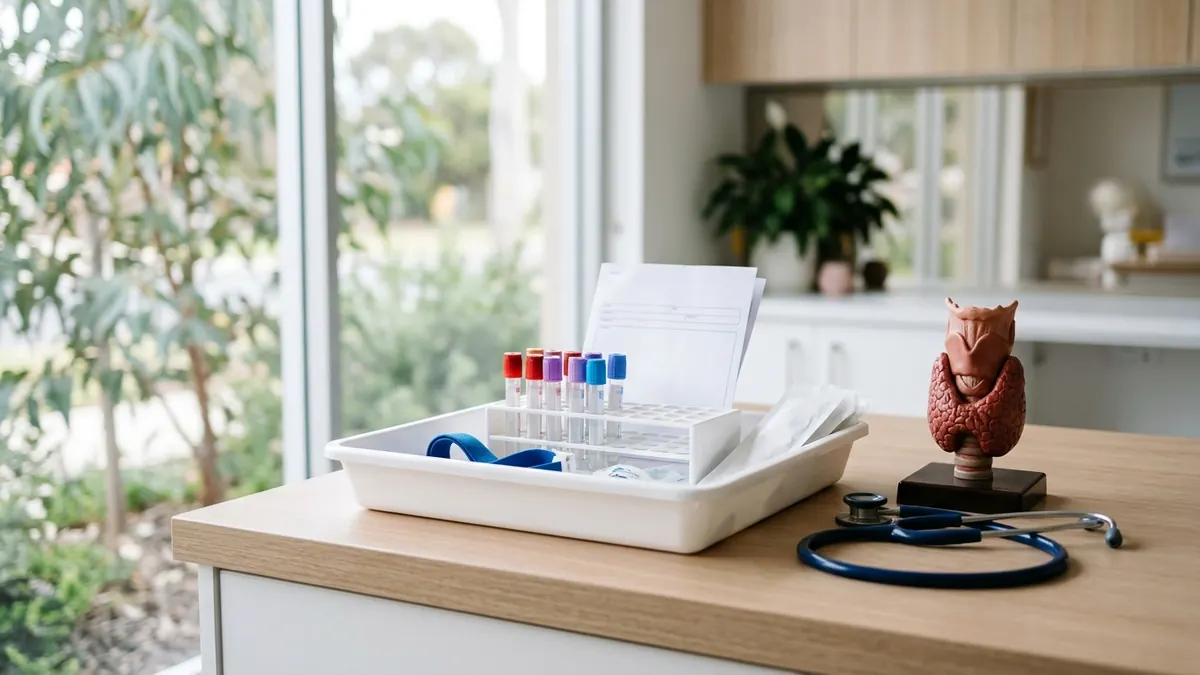
Thyroid test results come with a lot of abbreviations, and a report full of H and L flags can be confusing. This guide explains what each test measures, how to prepare, and what to ask your GP.
- TSH is usually the first thyroid test, and your GP may add free T4, free T3 or antibodies depending on the result.
- A single result slightly outside the range often needs repeating before any conclusions are drawn.
- Biotin supplements can interfere with some thyroid tests, so tell your doctor and pharmacist what you take.
- Pregnancy changes thyroid reference ranges, so mention it before testing.
- Do not start iodine or kelp supplements without advice from your GP or pharmacist.
Why doctors test the thyroid in the first place
The thyroid is a small butterfly-shaped gland at the base of your neck. It releases hormones that set the pace for many body systems, including heart rate, body temperature and how quickly you use energy.
When it makes too little hormone (underactive) or too much (overactive), the symptoms can be vague. Tiredness, feeling cold, weight changes, a racing heart, trouble sleeping, dry skin and mood changes all have plenty of other causes. That is why a blood test is usually the first step. It gives your GP something objective to work with, alongside your history and a physical check of your neck.
TSH: usually the first test ordered
TSH stands for thyroid-stimulating hormone. It is made by the pituitary gland in your brain, not by the thyroid itself. Think of it as a thermostat signal. If thyroid hormone levels drop, the pituitary releases more TSH to nudge the thyroid along. If levels climb too high, TSH falls.
What a high or low TSH can suggest
A raised TSH often points towards an underactive thyroid, because the pituitary is working harder to get a response. A low TSH often points towards an overactive thyroid. Your GP will look at the number in context, since a result slightly outside the reference range does not always mean treatment is needed.
Reference ranges differ a little between pathology labs, so always compare your result with the range printed on your own report rather than one you found online.
Why one number is not the whole story
TSH can shift temporarily during illness, after some medicines, or in the weeks after a thyroid problem settles. Doctors commonly repeat an unexpected result after a few weeks before drawing conclusions.
Free T4 and free T3: the hormones themselves
If your TSH is outside the range, your doctor may add tests for the actual hormones. T4 (thyroxine) is the main hormone the thyroid releases. T3 (triiodothyronine) is the more active form, made mostly when T4 is converted in the body's tissues.
The word "free" means the portion not attached to proteins in the blood, which is the part available for your cells to use. Free T4 helps confirm whether the thyroid is truly underactive or overactive. Free T3 is used less often, but it can be useful when an overactive thyroid is suspected and the T4 looks normal.
Here is a simple example. A person has a mildly raised TSH but a normal free T4. Doctors sometimes call this subclinical hypothyroidism. It may be monitored with repeat tests rather than treated straight away, depending on symptoms, age, pregnancy plans and other factors. That decision belongs with your GP.
Antibody tests and imaging
Blood hormone levels show what the thyroid is doing. They do not explain why. That is where further tests come in.
Thyroid antibodies
In Australia, a common cause of an underactive thyroid is Hashimoto's thyroiditis, an autoimmune condition. Testing for thyroid peroxidase antibodies (TPO) can support that diagnosis. A different antibody, the TSH receptor antibody, is often checked when an overactive thyroid is suspected, as it can point to Graves' disease.
Antibody tests are not usually needed every time. Your doctor will decide whether the result would change your care.
Ultrasound and scans
If you have a lump or swelling in your neck, a thyroid ultrasound shows the size and structure of the gland and any nodules. Most nodules turn out to be harmless, but some need a closer look, such as a fine-needle biopsy.
A nuclear medicine scan uses a small amount of radioactive tracer to show how active different parts of the thyroid are. It is generally reserved for specific situations, such as an overactive thyroid with nodules.
Getting ready for a thyroid test
Most thyroid blood tests do not require fasting, but check with the clinic or your GP if other tests are being done at the same time.
A few practical points can improve the accuracy of your results:
Tell them about supplements, especially biotin
Biotin (vitamin B7), found in many hair, skin and nail supplements and some multivitamins, can interfere with certain lab methods and make results look misleading. Tell your GP, pharmacist and the collection staff if you take it. Do not stop any supplement or medicine without advice first, as the right timing varies.
Timing if you already take thyroid medicine
If you are on thyroid hormone replacement, some doctors prefer that you have your blood drawn before your morning dose, then take it afterwards. Others have no preference. Ask your GP which they want, and keep the timing consistent from test to test so results can be compared fairly.
Pregnancy and planning a baby
Thyroid hormone needs change in pregnancy, and the usual reference ranges do not apply in the same way. If you are pregnant or planning to be, let your doctor know so the results are interpreted correctly.
After the results: what happens next
A normal result can still leave you wondering why you feel unwell. If your thyroid tests are fine but symptoms persist, go back to your GP. Iron levels, sleep, mental health, other hormones and many other things can be involved.
If a thyroid condition is found, management depends on the type and severity. It may involve regular monitoring, prescription medicine, or specialist referral to an endocrinologist. Thyroid conditions are generally managed rather than fixed overnight, and follow-up blood tests are a normal part of that.
Medicare rebates for thyroid tests can depend on the clinical reason for testing and how often tests are repeated, so ask your GP or the pathology provider about any out-of-pocket costs. Your pharmacist can also answer questions about how supplements or other medicines might affect your results or interact with thyroid treatment.
Avoid starting iodine or kelp supplements on your own. Too much iodine can make some thyroid problems worse, and most Australians get enough from food, including iodised salt used in bread-making.
Frequently asked questions
Do I need to fast for a thyroid blood test?
Usually not. Thyroid tests on their own typically do not require fasting, but if your GP has ordered other tests at the same visit, such as cholesterol or glucose, you may be asked to fast. Check the instructions on your pathology request.
Can I take my thyroid medicine before the blood test?
It depends on your doctor's preference. Some ask you to delay the morning dose until after the blood is taken, while others are happy for you to take it as normal. Ask your GP and try to stay consistent each time.
How often should thyroid levels be checked?
There is no single schedule. After a diagnosis or a dose change, tests are often repeated within weeks to months. Once things are stable, many people are checked about once a year. Your GP will set the timing for your situation.
Can stress or being sick change my thyroid results?
Yes, significant illness and some medicines can temporarily shift thyroid results. If a result looks unexpected, your doctor may repeat the test once you have recovered.
Medical disclaimer: This information is general in nature and is not a substitute for advice from your doctor or pharmacist. Prescription-only medicines are supplied only against a valid prescription.